
**Building Advanced AI Agents with Google Gemini 3 and Open-Source Tools**
The realm of AI agents is advancing rapidly, transitioning from basic chatbots to sophisticated, semi-autonomous systems capable of making intricate decisions in real-world scenarios. This week, Google introduced the **Gemini 3 Pro Preview**, a powerful agentic model designed to serve as the core orchestrator for these advanced workflows. We collaborated closely with open-source partners to integrate and test this model, exploring its new agentic features and how to build next-generation AI agents using open-source frameworks.
**Why Choose Gemini 3 for Your AI Agents?**
Gemini 3 offers several features that provide developers with granular control over cost, latency, and reasoning depth, making it the most capable foundation for AI agents yet:
– **Control Reasoning with thinking_level**: Adjust the logic depth on a per-request basis. Set thinking_level to high for deep planning, bug finding, and complex instruction following, or low for high-throughput tasks to achieve latency comparable to Gemini 2.5 Flash with superior output quality.
– **Stateful Tool Use via Thought Signatures**: The model generates encrypted “Thought Signatures” representing its internal reasoning before calling a tool. By passing these signatures back in the conversation history, your agent retains its exact train of thought, ensuring reliable multi-step execution without losing context.
– **Adjustable Multimodal Fidelity**: Balance token usage and detail with media_resolution. Use high for analyzing fine text in images, medium for optimal PDF document parsing, and low to minimize latency for video and general image descriptions.
– **Large Context Consistency**: Combined with thought signatures, the large context window mitigates “reasoning drift,” allowing agents to maintain consistent logic over long sessions.
**Agentic Open Source Ecosystem: Day 0 Support**
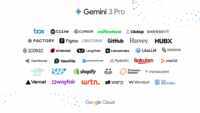
We’ve worked closely with the open-source community to ensure libraries are ready to tap into Gemini 3 immediately. Here are some top frameworks offering Day 0 support:
– **LangChain**: LangChain provides an agent engineering platform and open-source frameworks, LangChain and LangGraph, for millions of developers. By representing workflows as graphs, developers can build stateful, multi-actor AI agents that leverage Gemini and Gemini embedding models directly.
– **AI SDK by Vercel**: The AI SDK is a TypeScript toolkit designed to help developers build AI-powered applications and agents with React, Next.js, Vue, Svelte, Node.js, and more. Using the Google provider, developers can implement features such as text streaming, tool use, or structured generation with Gemini 3.
– **LlamaIndex**: LlamaIndex is a specialized framework for building knowledge agents using Gemini connected to your data. This includes tools across agent workflow orchestration, data loading, parsing, extraction, and indexing with both LlamaIndex open-source tooling and LlamaCloud.
– **Pydantic AI**: Pydantic AI offers a framework for building AI agents with a focus on data validation and settings management, making it easier to create robust and reliable AI agents.
– **n8n**: n8n is a workflow automation tool that can be integrated with Gemini 3 to create complex, multi-step AI agents that can handle various tasks and workflows.
**Conclusion**
Gemini 3 Pro Preview represents a significant step forward in the development of AI agents. With its advanced features and the support of open-source frameworks, developers now have the tools they need to build sophisticated, reliable AI agents. Whether you’re looking to create complex workflows, handle multimodal data, or ensure consistent reasoning over long sessions, Gemini 3 and its open-source ecosystem provide the foundation you need to succeed.
**FAQ**
**Q: What is Gemini 3 Pro Preview?**
A: Gemini 3 Pro Preview is Google’s most powerful agentic model designed to act as the core orchestrator for advanced AI workflows.
**Q: How can I control the reasoning depth in Gemini 3?**
A: You can control the reasoning depth by adjusting the thinking_level parameter on a per-request basis.
**Q: What are Thought Signatures in Gemini 3?**
A: Thought Signatures are encrypted representations of the model’s internal reasoning before calling a tool, ensuring reliable multi-step execution without losing context.
**Q: Which open-source frameworks support Gemini 3 Day 0?**
A: Some of the top frameworks offering Day 0 support include LangChain, AI SDK by Vercel, LlamaIndex, Pydantic AI, and n8n.
**Q: How can I get started with building AI agents using Gemini 3?**
A: You can get started by exploring the documentation and resources provided by the open-source frameworks that support Gemini 3, such as LangChain and AI SDK by Vercel.




Leave a Comment