
Dogecoin Enters Accumulation Territory: On-Chain Data Signals Bullish Shift
As Thursday’s trading session concluded, the cryptocurrency market experienced a broad downturn, pushing Dogecoin’s price below the $0.15 threshold. Despite the ongoing challenges in sustaining a significant rally, a key on-chain metric suggests a growing bullish sentiment among traders, indicating a potential shift towards Dogecoin accumulation. This article, from LegacyWire – Only Important News, dives deep into the data, analyzing what this means for the future of the meme coin.
Dogecoin Moving Into Accumulation Mode
Recent analysis indicates that the Dogecoin market is at a critical inflection point, poised to define its next phase. Sina Estavi, CEO of Bridge AI, reported that on-chain data is signaling a significant change in DOGE’s market trend. This isn’t just speculation; it’s grounded in a sophisticated understanding of market cycles and investor behavior.
Estavi’s findings are based on the Dogecoin Bubble Risk Model, a metric designed to identify periods where an asset’s price is substantially overvalued relative to its intrinsic worth. The model aims to detect speculative bubbles before they burst. Surprisingly, Estavi’s analysis reveals that DOGE is not currently exhibiting characteristics of a bubble. The indicator typically flares red during periods of extreme speculative excess, but recent data shows a muted signal compared to previous market cycles. This suggests a more rational, less frenzied market environment.
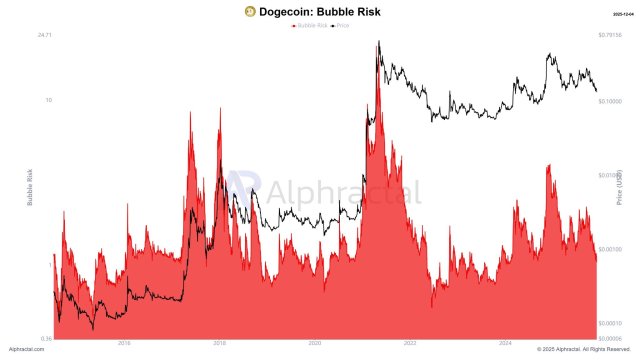
This contrasts sharply with the fear-driven narratives often associated with price dips. The data suggests a surprisingly stable market, supported by consistent Dogecoin accumulation, strong holder conviction, and healthy network activity. This stability is a key indicator of a maturing asset, moving beyond purely speculative trading.
Estavi emphasizes that, structurally, Dogecoin is transitioning into an accumulation territory, rather than a “blow-off top” – a scenario where a price surge is followed by a rapid and substantial decline. This subtle but powerful indicator suggests that DOGE’s foundation remains stronger than many critics believe. Understanding these structural shifts is crucial for long-term investors.
Understanding the Dogecoin Bubble Risk Model
The Dogecoin Bubble Risk Model isn’t a simple price chart analysis. It incorporates several factors, including network activity, transaction volume, and the velocity of money (how quickly Dogecoin changes hands). A high velocity suggests speculation, while a low velocity indicates holding and accumulation. Currently, the model points to a decreasing velocity, supporting the accumulation thesis.
Active Addresses Showing Up At A Substantial Rate
The shift towards accumulation is further corroborated by a significant increase in active wallet addresses on the Dogecoin network. Despite market volatility and the recent price pullback, new investors are actively entering the ecosystem. This demonstrates continued interest and belief in Dogecoin’s potential.
Market expert Ali Martinez shared data revealing that Dogecoin recorded over 71,589 active addresses on Thursday. This represents the highest spike in this metric since September 2025. This surge suggests growing momentum beneath the surface, potentially foreshadowing a significant shift in market dynamics and future price action. It’s a clear sign that demand is not waning.
Furthermore, accumulation is also occurring among whale investors. Martinez noted in another X post that these large holders have been actively buying DOGE, acquiring over 480 million DOGE (approximately $71.2 million at current prices) in the last two days. This indicates that even sophisticated investors are taking advantage of the dip, reinforcing the accumulation narrative. Whale activity is often a leading indicator of future price movements.
Whale Accumulation: A Sign of Confidence
The recent whale accumulation is particularly noteworthy. Whales don’t typically invest heavily in assets they believe are headed for a significant decline. Their actions suggest they anticipate a future price increase, driven by increased adoption or positive market sentiment. This accumulation provides a strong signal to other investors.
Dogecoin: A Brief History & Context
Dogecoin, born from a 2013 internet meme, initially gained popularity as a lighthearted alternative to Bitcoin. However, it has evolved into a legitimate cryptocurrency with a dedicated community and increasing real-world use cases. Its price has been heavily influenced by social media trends and endorsements, most notably from Elon Musk. Despite its meme origins, Dogecoin boasts a robust blockchain and a growing ecosystem of developers.
Factors Influencing Dogecoin’s Price
- Market Sentiment: Social media and news coverage play a significant role.
- Elon Musk’s Involvement: His tweets and announcements often cause price fluctuations.
- Broader Cryptocurrency Market Trends: Dogecoin is often correlated with Bitcoin and other major cryptocurrencies.
- Network Activity: Increasing transaction volume and active addresses indicate growing adoption.
- Technological Developments: Improvements to the Dogecoin blockchain can enhance its functionality and appeal.
Implications of Accumulation for Dogecoin
The shift towards Dogecoin accumulation has several potential implications:
Price Stability: Increased holding reduces selling pressure, potentially stabilizing the price.
Future Price Appreciation: If demand continues to rise while supply remains constrained, the price could increase.
Increased Adoption: Positive sentiment and price stability can attract new users and developers.
Long-Term Growth: Accumulation suggests a belief in Dogecoin’s long-term potential.
However, it’s important to acknowledge the risks. The cryptocurrency market is inherently volatile, and unforeseen events can impact prices. Furthermore, Dogecoin’s reliance on social media sentiment makes it susceptible to manipulation and hype cycles. Investors should always conduct their own research and exercise caution.
Conclusion
The on-chain data paints a compelling picture: despite recent price dips, the Dogecoin market appears to be entering an accumulation phase. The Dogecoin Bubble Risk Model, coupled with the surge in active addresses and whale accumulation, suggests a growing bullish sentiment. While risks remain, these indicators offer a glimmer of hope for Dogecoin investors. LegacyWire will continue to monitor the situation and provide updates as they develop. The key takeaway is that the market isn’t panicking; it’s preparing.
Frequently Asked Questions (FAQ)
- What is Dogecoin accumulation? Accumulation refers to a period where more investors are buying and holding Dogecoin than selling, leading to a decrease in available supply and potentially driving up the price.
- What is the Dogecoin Bubble Risk Model? It’s a metric developed to identify periods of speculative excess in the Dogecoin market, helping to determine if the price is overvalued.
- Are whales manipulating the Dogecoin market? While it’s impossible to know for sure, the recent whale accumulation suggests they believe in Dogecoin’s future potential.
- Is Dogecoin a good investment? That depends on your risk tolerance and investment goals. Dogecoin is a volatile asset, and you should only invest what you can afford to lose.
- Where can I find more information about Dogecoin? You can find more information on the official Dogecoin website (https://dogecoin.com/), reputable cryptocurrency news sites, and blockchain explorers.
Semantic Keywords: cryptocurrency, meme coin, blockchain, digital asset, market analysis, on-chain data, investor sentiment, Dogecoin accumulation, whale activity, active addresses, Dogecoin Bubble Risk Model, volatility.


Leave a Comment