
Tether’s Strategic Shift: Increasing Bitcoin and Gold Reserves Amid Declining Treasury Holdings
In a significant strategic maneuver, Tether has revamped its reserve strategy by decreasing its reliance on U.S. Treasury securities while simultaneously boosting its investments in Bitcoin and gold. This shift reflects the company’s response to evolving market conditions and its desire to enhance its asset portfolio with hard assets that are recognized for their resilience and independence from conventional financial systems.
Declining Treasury Holdings in Response to Market Dynamics
As a leading player in the stablecoin market, Tether has made headlines by slashing its U.S. Treasury holdings and reallocating those funds into Bitcoin and gold. Reports from CryptosRus indicate that Tether is strategically positioning itself in anticipation of forthcoming interest rate cuts by the Federal Reserve (FED). This proactive approach aims to mitigate risks associated with traditional government debt.
According to Arthur Hayes, the founder of BitMex, Tether’s recent reserve adjustments signify a clear pivot away from U.S. Treasuries towards more volatile assets like Bitcoin and gold. This transition suggests that Tether is preparing for a shifting macroeconomic landscape. The Standard & Poor’s (S&P) Global has also noted that Tether is increasingly investing in assets that exhibit greater price fluctuations, which could pose risks to USDT if market conditions become unstable. Currently, Tether’s S&P Global rating remains under scrutiny due to concerns regarding its asset disclosures.
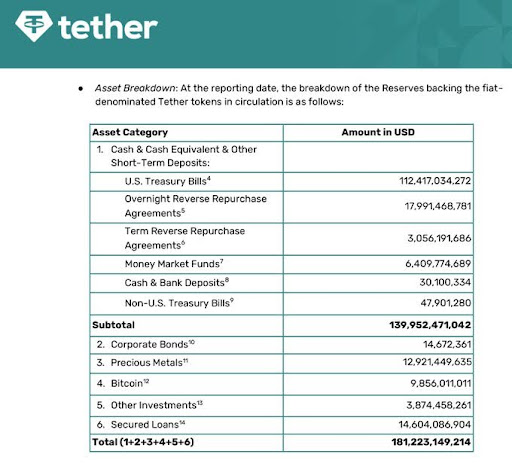
In response to these concerns, Tether’s CEO, Paolo Ardoino, has asserted that the company does not hold any toxic assets. He emphasizes that Tether’s rapid growth is indicative of a broader transition towards innovative financial systems that operate outside the traditional banking framework.
Challenges in Undermining Tether’s Stability
Crypto analyst Ted Pillows has provided insights into the ongoing narrative surrounding Tether, which often faces skepticism and doubt (FUD). This skepticism has resurfaced with Tether’s latest reserve report, highlighting its increased allocations to gold and Bitcoin as a means to counteract declining interest income. However, there are concerns that if these risk assets were to experience a significant downturn, Tether’s equity buffer could diminish, potentially leading to insolvency and triggering panic among investors.
Despite these challenges, Pillows remains confident in Tether’s resilience, noting that the stablecoin has weathered similar FUD for over a decade, maintaining its peg to the dollar at $1.00. He asserts that Tether is fully liquid, operating on a fractional-reserve model akin to traditional banks. As long as redemption requests remain stable, Tether’s operations should continue smoothly. However, irrational panic could lead to liquidity stress, which would pose a risk to the stablecoin’s stability.
Pillows further explains that while USDT is not entirely backed by cash, it is supported by a diversified portfolio that includes U.S. Treasuries, yield-generating assets, and some riskier investments. This portfolio is scaled to a substantial $174 billion stablecoin market. He concludes, “If someone wants to kill USDT, it’s possible, but I highly doubt it.”

The Implications of Tether’s Reserve Strategy
The implications of Tether’s strategic pivot towards Bitcoin and gold are multifaceted. By reducing its Treasury holdings, Tether is not only adapting to the current economic climate but also positioning itself to capitalize on the potential appreciation of these hard assets. This move could enhance Tether’s overall stability and attractiveness as a stablecoin, especially in times of economic uncertainty.
Advantages of Increasing Bitcoin and Gold Reserves
- Hedge Against Inflation: Both Bitcoin and gold are often viewed as hedges against inflation. As central banks continue to print money, these assets may retain their value better than traditional fiat currencies.
- Potential for High Returns: Bitcoin, in particular, has shown significant price appreciation over the years, providing opportunities for substantial returns on investment.
- Independence from Traditional Financial Systems: Investing in hard assets allows Tether to operate outside the constraints of conventional banking, offering users a sense of security and autonomy.
Disadvantages and Risks Involved
- Market Volatility: The prices of Bitcoin and gold can be highly volatile, which may expose Tether to risks if market conditions shift dramatically.
- Regulatory Scrutiny: As Tether increases its holdings in these assets, it may attract more regulatory attention, which could impact its operations and market perception.
- Liquidity Concerns: In times of market stress, the ability to quickly liquidate these assets without significant losses may be challenging.
Future Outlook for Tether and the Stablecoin Market
Looking ahead, Tether’s strategic shift towards Bitcoin and gold could set a precedent for other stablecoin issuers. As the market continues to evolve, the demand for stablecoins that offer a degree of independence from traditional financial systems is likely to grow. In 2026, we may see a more diversified stablecoin landscape, with issuers adopting similar strategies to enhance their resilience and appeal.
The latest research indicates that as more investors seek alternatives to fiat currencies, stablecoins backed by hard assets may gain traction. This trend could lead to increased competition among stablecoin providers, prompting them to innovate and differentiate their offerings.
Frequently Asked Questions (FAQ)
What is Tether’s current reserve strategy?
Tether has reduced its U.S. Treasury holdings and increased its investments in Bitcoin and gold to enhance its asset portfolio and mitigate risks associated with traditional government debt.
Why is Tether shifting towards Bitcoin and gold?
The shift is a response to changing macroeconomic conditions and aims to provide a hedge against inflation while capitalizing on the potential appreciation of these hard assets.
What are the risks associated with Tether’s new strategy?
The primary risks include market volatility, regulatory scrutiny, and potential liquidity concerns if significant market stress occurs.
How does Tether maintain its dollar peg?
Tether maintains its peg to the dollar by ensuring that its reserves are liquid and can meet redemption requests, operating on a fractional-reserve model similar to traditional banks.
What does the future hold for Tether and stablecoins?
The future may see a more diversified stablecoin market, with issuers adopting strategies similar to Tether’s to enhance resilience and appeal to investors seeking alternatives to fiat currencies.
Leave a Comment