
The Ratline: Uncovering Nazi War Criminals Through Satisfying Detective Work
In the tense geopolitical climate of 1971, a private detective is handed a seemingly impossible task: track down Nazi war criminals who have vanished into new lives across the globe. This is the premise of The Ratline, an investigative game from Owlskip Games, helmed by Tim Sheinman, a developer with a proven track record in crafting intricate narrative puzzles. Building on his previous acclaimed titles like Family, Rivals, and Riley & Rochelle, Sheinman once again challenges players to meticulously sift through evidence, connect disparate pieces of information, and ultimately, bring elusive figures to justice.
The Ratline, named after the clandestine escape routes used by Nazis and collaborators to flee Europe after World War II, plunges players into a world of deception and hidden identities. The game eschews traditional action-oriented gameplay for a more cerebral experience, focusing on the painstaking process of detective work. Players are presented with a central pinboard, a cluttered desk featuring a telephone, rolodex, and radio, serving as their primary interface for unraveling each mystery. This tactile setup aims to immerse players in the role of a detective piecing together fragmented clues.
The Art of the Investigation: Piecing Together the Past
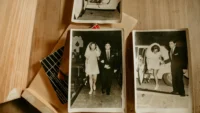
At its core, The Ratline is about deduction and careful observation. Each case begins with a dossier of limited information – perhaps a photograph, a business card, or a cryptic letter. Your mission is to use these initial scraps to identify your target, uncover their real name, and pinpoint their current whereabouts. This involves a deep dive into the provided documents, researching points of interest, and making crucial phone calls to informants who might hold the missing pieces of the puzzle.
The game simulates the detective’s workflow through a series of interconnected mechanics. You’ll pore over photographs, scrutinize official documents, and read personal correspondence, all while managing a rolodex of contacts and utilizing a radio for communication. The goal is to build a comprehensive profile of each fugitive, connecting their past actions with their present-day existence. Success in one chapter unlocks the next, gradually escalating the complexity of the investigations and the stakes involved.
One of the game’s unique aspects is its presentation of information. Documents and photographs are pinned to a virtual board, allowing players to physically arrange and rearrange evidence, mirroring the process of a real-life investigator. This visual metaphor for connecting clues is central to the gameplay loop. However, the game also incorporates some less conventional elements. For instance, players can type keywords into an anachronistic machine to generate further documentation. While this can be an effective tool for uncovering new leads, it sometimes falters, failing to yield results for seemingly obvious search terms, which can break the immersion.
Navigating the Shadows: Challenges and Immersion
The narrative of The Ratline is deeply rooted in historical reality. Many high-ranking Nazis and collaborators did indeed escape justice after the war, adopting new identities and integrating into societies across the globe, particularly in South America. They became dentists, wine merchants, or even rose through the ranks of law enforcement, their pasts carefully concealed. The game captures this historical phenomenon, tasking players with hunting down individuals who have gone to great lengths to erase their former selves.
The game’s commitment to realism is commendable, but it also leads to some moments that strain credulity. For example, the speed at which information is acquired via telephone can feel jarring. A quick call to someone on another continent might result in photographs and documents appearing almost instantaneously. While these concessions are necessary for the game’s pacing and functionality, they do introduce a touch of the fantastical into an otherwise grounded experience. The developers acknowledge this by having the game’s mechanics sometimes feel a bit “scrappy,” a charming self-awareness that doesn’t detract significantly from the overall enjoyment.
The characters encountered in The Ratline are designed to add depth and complexity to the investigations. These aren’t just faceless targets; they are individuals with stories, motivations, and secrets. You might interact with individuals who are complicit in hiding the war criminals, or perhaps those who are actively seeking to expose them. Each conversation and piece of evidence contributes to a richer understanding of the historical context and the moral ambiguities inherent in hunting down individuals who have built new lives, however tainted their origins.
A Legacy of Investigative Games
Tim Sheinman’s work at Owlskip Games, and previously with ZA/UM, has consistently explored the intricacies of narrative investigation. Titles like Family, Rivals, and Riley & Rochelle laid the groundwork for The Ratline, demonstrating a passion for games that require players to engage with dense information, construct timelines, and uncover hidden truths. Sheinman was exploring these mechanics years


Leave a Comment